
Hugo Russell · 19 September 2026
Exploring How Logistics Purchases Are Quietly Powering Green Energy Partnerships Across Shifting Trade Landscapes
Logistics acquisitions have become a strategic mechanism that connects supply chain operations with renewable energy projects in regions experiencing trade policy adjustments; companies acquire freight networks, warehousing assets, and transport fleets to secure routes for solar panels, wind turbine components, and battery materials. Research from the International Energy Agency shows that such purchases streamline the movement of equipment across borders where tariffs and regulatory changes alter traditional shipping patterns. Observers note that these deals often occur without public announcements yet they establish the infrastructure needed for long-term energy partnerships between manufacturers and project developers.
Trade landscapes shifted after multiple nations revised import duties on raw materials and finished renewable goods in 2024 and 2025, prompting firms to buy logistics providers that already hold permits and relationships in key ports. Data indicates that these acquisitions reduce delivery times for critical components by integrating customs clearance processes directly into the purchasing company's operations. Experts have observed that the approach allows energy developers to bypass delays that arise when relying on third-party carriers subject to new documentation requirements.
Supply Chain Integration Through Targeted Acquisitions
Logistics purchases enable direct control over the flow of materials required for offshore wind farms and large-scale solar installations; buyers gain access to specialized vessels and rail connections that move heavy equipment from production sites to installation locations. Studies conducted by academic researchers at the University of Melbourne reveal that integrated logistics networks cut transportation costs by an average of 18 percent when ownership transfers occur before major project timelines begin. Those networks also support the return logistics for maintenance parts, which becomes essential as renewable installations age and require ongoing component replacements.
Regional variations appear across North America, Europe, and Asia where different trade agreements influence the value of specific assets. In Canada, for instance, purchases of trucking fleets have facilitated cross-border movement of hydroelectric equipment under updated USMCA provisions, while Australian port operators have attracted buyers seeking faster routes for hydrogen export infrastructure. Figures from government statistical agencies demonstrate that these transactions cluster around corridors already equipped with green fuel bunkering facilities.
Partnership Formation Between Energy and Logistics Sectors
Green energy partnerships frequently emerge after one party secures logistics capabilities that complement the other's generation assets; a renewable developer might pair with a newly acquired freight network to guarantee on-time delivery of turbines while the logistics firm gains guaranteed cargo volumes. Reports from the US Department of Energy highlight cases where such pairings accelerated project commissioning dates by several months because material bottlenecks were eliminated at the planning stage. The partnerships extend beyond single projects when logistics assets serve multiple renewable sites across shifting trade zones.
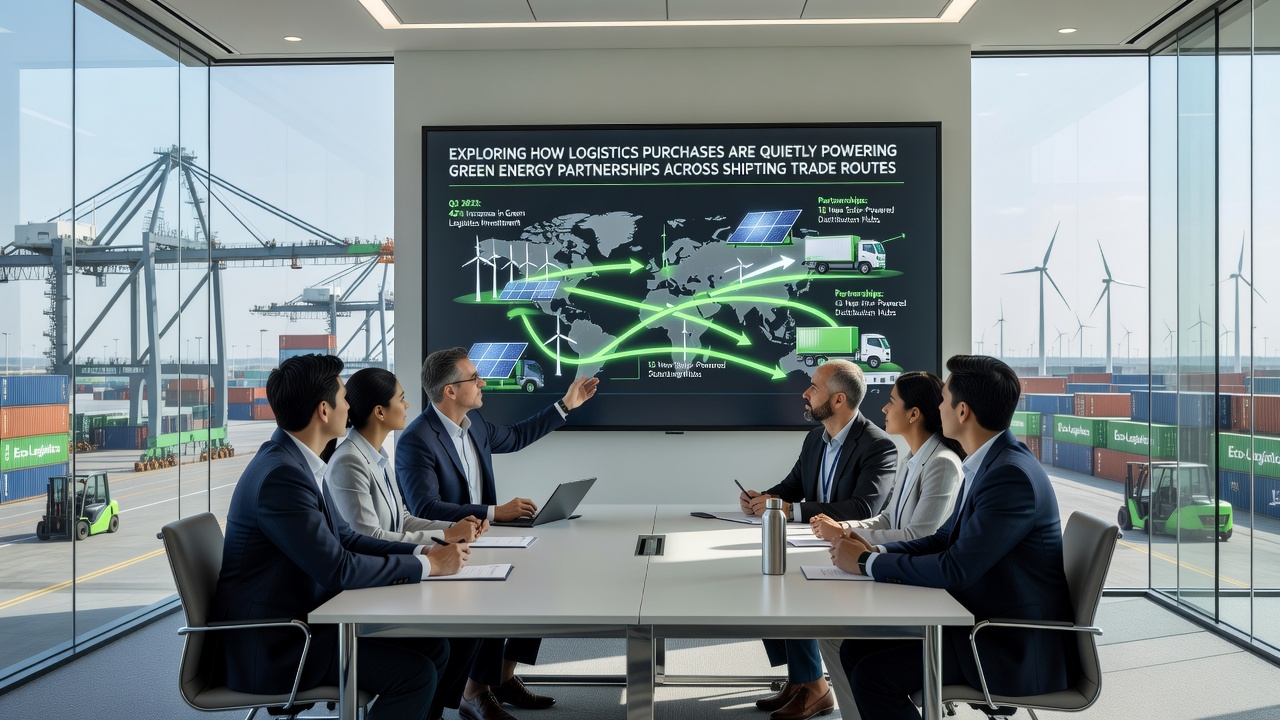
September 2026 brought additional clarity to several bilateral trade frameworks that affect energy equipment flows, allowing logistics buyers to finalize acquisition terms with greater certainty about future customs procedures. Industry organizations tracking these developments report that the timing encouraged a wave of mid-year deals focused on hydrogen and battery supply chains. Companies that completed purchases earlier in the decade now operate established routes that newer entrants seek to replicate through similar acquisitions.
Regional Examples and Data Patterns
One documented case involves a European logistics group acquiring a specialized rail operator in Eastern Europe, which then supported solar module deliveries to construction sites under evolving carbon border adjustment mechanisms. Another pattern appears in Latin American markets where port terminal purchases facilitated wind turbine imports from Asian manufacturers amid changing tariff structures. Research papers published in energy economics journals document that logistics ownership correlates with higher completion rates for renewable projects in jurisdictions with frequent trade policy updates.
Quantitative analysis from multiple national statistics offices shows growth in logistics transaction volumes aligned with renewable capacity additions between 2023 and 2026. The data covers both outright purchases and joint ventures that grant operational control over distribution networks. Observers note that these moves occur quietly because regulatory filings often classify the transactions under general transportation categories rather than energy-specific headings.
Conclusion
Logistics purchases continue to underpin green energy partnerships by providing the physical and procedural connections required across evolving trade environments. Evidence from government agencies, academic studies, and industry reports confirms that control over transport and storage assets reduces project risks associated with material availability. As trade frameworks undergo further adjustments, the pattern of targeted acquisitions is expected to persist because it delivers measurable improvements in delivery reliability and cost predictability for renewable energy developments.